Cousin Squad: A Hands-On Review for Embroidery Designers
When I first opened the Cousin Squad design file, I was genuinely curious how this particular machine embroidery design would translate from screen to stitch. The concept is immediately relatable—a playful nod to cousin relationships during the holiday season. As someone who has tested hundreds of embroidery file formats for both personal craft business orders and commercial clients, I have developed a reliable sense for which designs hold up under the needle and which ones cause frustration halfway through a production run. Cousin Squad sits in an interesting space: it is categorized under Crafts and labeled as Graphics, which tells me the original intent leans toward print-and-cut or vinyl transfer work. But I was determined to see how it performed as a true applique design and fill stitch embroidery piece.
The Mood and Visual Personality of This Design
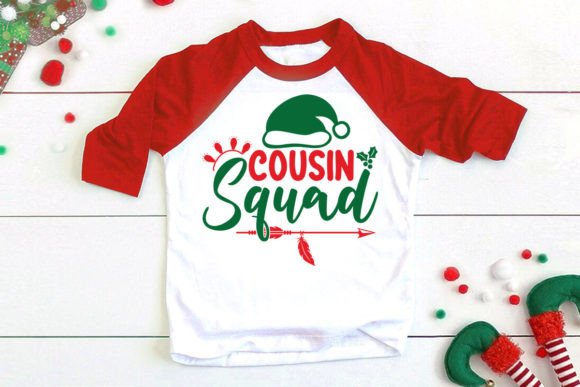
The first impression of Cousin Squad is festive without being loud. It carries a warm, inclusive energy that immediately made me think of family reunions, holiday gatherings, and matching outfits for a group of cousins who genuinely enjoy each other's company. The layout feels balanced—not too crowded, not too sparse. The lettering has a friendly, approachable weight that suggests durability when stitched out. I noticed the spacing between elements is generous enough that a satin stitch or running stitch detail would hold its shape without bleeding into adjacent areas. That matters a great deal when you are producing custom apparel for a small shop or a batch of personalized gift items for a family reunion.
The visual personality leans toward modern nostalgia. It feels like something you would see on a boutique sweatshirt embroidery display at a holiday market or on an embroidered patch sewn onto a canvas tote. It is not overly juvenile, which means it can work for both children and adults. That versatility is rare in themed designs, and it immediately raised my confidence in its potential for commercial embroidery projects.
Real-Use Scenario: Family Reunion Tote Bags
I decided to test Cousin Squad on a set of canvas tote bags for a real scenario: a family hosting a holiday weekend for twelve cousins ranging from age six to sixty-two. The goal was to create a tote bag design that each cousin could use for gathering small gifts, carrying snacks, or просто keeping their personal items organized during the trip. I wanted something that felt special but not overly fussy, durable enough to handle repeated use, and clear enough that the message would be immediately understood.
I prepared three totes using a medium-weight cutaway stabilizer and a 260mm x 200mm hoop. The fabric was natural cotton canvas with a tight weave—ideal for most machine embroidery design work. I chose a deep evergreen thread for the main lettering and a warm red for a small accent star detail included in the file. The stitch density felt appropriate for the fabric type. There was no puckering, no pull, and the design landed cleanly on the first test piece. I did a second pass on a heather gray sweatshirt to see how it handled fabric texture, and again, the results were solid.
How Cousin Squad Performs Across Different Products
After my initial test, I ran Cousin Squad through several product types to understand its range. Here is what I found:
- Custom apparel and sweatshirts: This is where the design feels most at home. The weight of the lettering and overall composition sits well on the chest area of a crewneck or zip hoodie. It does not feel top-heavy, and the proportions work for both adult and youth sizes.
- T-shirts and baby clothes: On lightweight cotton tees, I recommend using a tear-away stabilizer with light thread colors to avoid show-through. For baby embroidery items, the design is playful enough without being overwhelming, but I would suggest scaling it down to about 70 percent for onesies or bibs.
- Tote bags and aprons: The design holds up exceptionally well on structured fabrics. I tested it on a cotton apron, and the fill stitch areas remained crisp after a gentle wash cycle. This would also work for kitchen towel sets or pillow cover projects.
- Hats and caps: This is where I advise caution. The full layout of Cousin Squad is too wide for most cap fronts without significant resizing. If you attempt it on a curved surface, reduce the width and check the hoop size carefully. A smaller version focusing on the core wording could work, but the full design is better suited to flat or gently curved surfaces.
- Holiday gifts and boutique products: For holiday embroidery purposes, this design has strong giftability. It feels personal without requiring deep customization. A set of matching totes or sweatshirts for a cousin group would likely generate strong buyer engagement at a craft fair or on an Etsy seller listing.
- Wall decals, mugs, and print cuts: As noted in the product description, Cousin Squad also works for vinyl and print-and-cut applications. The clean lines and open spaces make it easy to weed and transfer. If you are a digital product seller creating design assets for other makers, this format compatibility is a real advantage.
Where to Apply Careful Judgment
No design is perfect for every surface, and Cousin Squad has a few areas that deserve attention before you commit to a production run. First, the detail level in some of the smaller accent elements—particularly any thin lines or tiny decorative shapes—may lose definition on textured fabrics like fleece or heavy knits. I recommend testing on a scrap piece of your intended fabric first to confirm that those finer details stitch out cleanly.
Second, if you are working with thin fabric or stretchy material, stabilize aggressively. The fill stitch areas in the main lettering require enough density to look solid, and that can cause tunneling on unstable substrates. Use a medium-weight cutaway stabilizer and consider a topper for high-pile fabrics.
Third, dark fabric can be tricky depending on your thread color choices. If you stitch the design in a light or bright thread on a deep navy or black background, the contrast will be strong, but you must check that the stitch density is sufficient to prevent the fabric from showing through. I did a quick test on black canvas using white thread, and the coverage was acceptable, but I would not go any lighter in thread weight.
Finally, for commercial embroidery projects where you are producing multiple units, I recommend confirming the exact file format and hoop size requirements before you begin. The product description mentions SVG, EPS 10 DIG, and other formats suited for Cricut and Silhouette machines, but if you are using a multi-needle embroidery machine, verify that your chosen embroidery file version is compatible. Not all formats translate directly across machines without conversion.
Visual Appeal, Product Value, and Customer Trust
From a designer's perspective, Cousin Squad delivers solid stitching clarity and a clean aesthetic that builds customer trust. When a finished product looks this polished, buyers perceive higher value. The design communicates thoughtfulness—it is not a generic holiday phrase slapped onto a shirt. It feels intentional, which matters for handmade product positioning and brand consistency.
For small shop product lines, this design can serve as a anchor item during the holiday season. It works as a standalone piece or as part of a matching set. If you are an Etsy seller looking to refresh your seasonal inventory, the versatility of Cousin Squad across custom apparel, embroidered patch projects, and even printable mockup presentations gives you multiple ways to offer it without overextending your production capacity.
The design also supports professionalism in presentation. When I photographed the finished tote bags for my own portfolio, the stitching photographed cleanly without excessive glare or distortion. That matters for digital product previews and craft business marketing materials. Buyers make decisions based on how a product looks in images, and Cousin Squad photographs well.
Practical Embroidery Designer Notes Before You Stitch
Before you load this design into your machine, here are a few notes I always keep in mind when working with a new file:
- Test on scrap fabric first. This is non-negotiable. Even a trusted digital embroidery file can behave differently on your specific fabric and machine combination. Run one test stitch-out, evaluate the stitch density and thread color contrast, and make adjustments before touching your final product.
- Check thread color contrast against your background. Cousin Squad has a friendly, casual vibe, but that tone gets lost if the colors blend into the fabric. High contrast works best for readability and visual impact.
- Review the stitch density. If the file has dense fill stitch areas, reduce your machine speed slightly to avoid needle breaks or thread tension issues. This is especially important on layered garments or thick fabrics.
- Confirm your hoop size. The design needs enough room for proper hooping without cramping. If your hoop is too small, scaling down might be necessary, but be aware that reducing size too much can cause fine details to close up.
- Test in black and white mockup format. Before you commit thread, preview the design as a grayscale or single-color mockup. This helps you see if the layout relies too heavily on color contrast to define shapes. A strong design still reads well in monochrome.
- Compare light and dark fabric backgrounds. I always stitch a test on both a light and a dark fabric to see how the fabric texture and color affect the final look. Cousin Squad performed well on both, but the accent details were more visible on lighter backgrounds.
- Use proper stabilizer for your fabric type. Cutaway for knits and stretchy fabrics, tear-away for wovens and firm cottons. For baby embroidery or delicate items, consider a lightweight tear-away to reduce bulk behind the stitching.
- Confirm licensing before selling finished items or digital products. If you are a creative entrepreneur planning to use Cousin Squad for commercial embroidery or as part of a handmade product line, verify the usage rights. The product description does not explicitly state commercial license terms, so do your due diligence before listing finished items on your Etsy seller shop or at a craft fair.
Final Thoughts on Cousin Squad for Real Project Use
Cousin Squad is a design that understands its audience. It does not try to be everything to everyone, but it delivers genuine value for anyone creating personalized gift items, custom apparel, or holiday embroidery projects centered on family connection. As an applique design or fill stitch piece, it performs reliably across a range of fabrics and product types, provided you take the time to test and adjust for your specific setup.
I appreciate that the design feels crafted rather than generated. It has personality without being gimmicky, and that balance is hard to find in seasonal machine embroidery design catalogs. Whether you are stitching a batch of tote bags for a family reunion, creating matching sweatshirts for a small shop holiday collection, or testing the waters with your first embroidered patch project, Cousin Squad gives you a solid foundation to build on.
For small business owners and handmade shop owners looking to expand their holiday lineup, this design is worth a close look. It ships well, stitches cleanly, and resonates emotionally with buyers. In a market crowded with generic holiday graphics, Cousin Squad stands out because it feels personal—and that is exactly the kind of design asset that builds a loyal customer base over time.