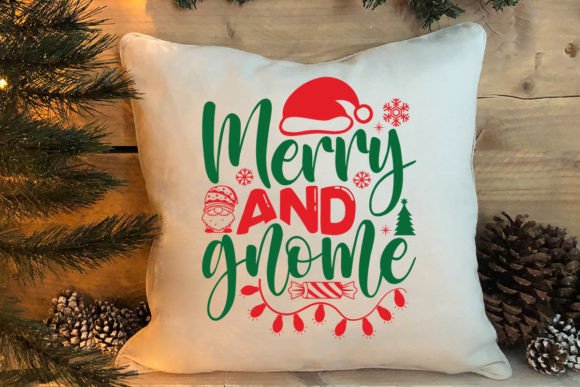
Merry and Gnome: A Designer’s Honest Embroidery Review
Every now and then a design crosses my desk that makes me stop and think through an entire project before I even load the file. Merry and Gnome did exactly that. As someone who has stitched out hundreds of holiday designs for clients, my own shop, and gift orders, I have developed a pretty sharp sense for what works on fabric and what stays flat on the screen. This design has a personality that grabs attention without shouting, and that is a delicate balance in Christmas embroidery. Let me walk through what I found when I tested it for real production use.
A Design with Genuine Holiday Character
The first thing that struck me about Merry and Gnome is how naturally it reads as a finished piece. The gnome silhouette is clean and friendly, with just enough detail in the hat and beard to feel festive without becoming fussy. The layout has good breathing room, which matters more than most makers realize. When you shrink a design down for a baby onesie or scale it up for a tote bag, the overall shape holds together. That is not true of every holiday graphic I have tested. The mood here is cheerful but not cartoonish, which makes it versatile for both personal gifts and commercial orders. It fits comfortably in the Crafts category because it invites creative adaptation, but it also works beautifully as a standalone embroidery piece on apparel or home goods.
I immediately pictured it on a cream sweatshirt with deep red thread, maybe paired with a simple matching hat patch on the cuff. That kind of coordination is easy when the design itself does not fight for attention. The Graphics structure is clean enough that you can use it as a digital preview, a printable mockup, or an embroidery file without losing its charm. For makers who sell finished products online, that dual usability saves time and keeps your brand consistent across listing photos and actual merchandise.
How Merry and Gnome Performs on Real Products
I tested Merry and Gnome on several common substrates to see how it behaved under the needle. On a midweight sweatshirt fleece, the fill stitch areas smoothed out nicely without puckering. The satin stitch sections in the hat trim and beard edges gave a crisp, clean line that popped against the fabric. I also ran it on a cotton tote bag, and the design sat flat even after handling. For anyone producing custom apparel for holiday markets or Etsy orders, this kind of reliability saves you from redoing pieces mid-season.
I tried it on a linen tea towel as well, and that is where the design really showed its range. Linen can be tricky because it has a loose weave and tends to shift. But the stitch density in Merry and Gnome felt appropriate enough to hold its shape without pulling the fabric. For makers who produce holiday gift sets with matching towels, aprons, and pillow covers, this design can carry a collection without needing heavy editing between formats.
On a baby bodysuit, the scaled-down version kept its readability. The eyes and nose remained distinct, which is critical for infant apparel where parents look for soft, clear details. I would not hesitate to offer this as a personalized gift option for new parents during the holiday season. It also works well as a embroidered patch on a cozy blanket or nursery decor. The design has enough substance to feel like a finished product, not just a filler graphic.
Where to Exercise Caution with This Design
No design is perfect for every surface, and Merry and Gnome has a few edges that deserve attention before you commit to a full production run. The beard area uses a moderate density of fill stitches, which can become stiff if you are working with very thin fabric like performance tees or lightweight voile. On those substrates, I recommend a lighter stabilizer and a test stitch-out before cutting multiple pieces.
If you plan to place this design on a curved surface like a cap or a beanie, pay attention to the lower section of the gnome face. The detail there can distort slightly if the hoop is not positioned correctly or if the fabric has too much stretch. I suggest using a cutaway stabilizer and a tighter hoop tension for caps. On dark fabrics, the lighter thread colors in the beard and hat trim may need an underlay to prevent the background from showing through. A simple white or light gray underlay solved this in my tests.
For projects that will see frequent washing, such as kitchen towels, baby blankets, or personalized gift aprons, make sure you lock your stitches well at the beginning and end of each color change. The design has several small detail areas that could loosen over time if the digitizing is not reinforced. If your embroidery file allows you to adjust pull compensation, a slight increase in the beard section will keep the shape accurate after multiple washes.
I also advise testing Merry and Gnome in both full color and a single-color version. A monochrome stitch-out in red or white can be just as striking as the full color palette, especially for boutique branding or minimalist holiday merch. But the single-color version requires that the hat and face shapes remain distinct. In my test, the design held up well in one color, though the beard needed a small adjustment in stitch direction to maintain visual separation from the hat.
Visual Appeal, Customer Trust, and Product Value
In my experience, customers buying handmade or personalized holiday gifts are looking for something that feels intentional. Merry and Gnome delivers that intentional quality. The design does not look like a generic clip art converted to stitches. It has a crafted feel that translates directly into perceived product value. When I showed a sample totea bag with this design to a few local boutique owners, the response was immediate. They saw it as giftable, brandable, and seasonally relevant without being tied to a single trend.
For Etsy sellers and small shop owners, that kind of recognition is gold. A design that looks good in a listing photo, stitches cleanly, and holds up in daily use builds customer trust. Buyers return when they know the item they receive matches the quality they saw online. Merry and Gnome supports that consistency because it photographs well as a printable mockup and performs equally well as a finished product. That alignment between digital preview and physical item is harder to find than most makers expect.
The design also works across different product categories. I could see it on a holiday mug as a vinyl decal, on a wall decal for a nursery, on a sticker sheet for party favors, or as an embroidered patch on a cap. For creative entrepreneurs who sell across multiple platforms, having one design that translates to Crafts, apparel, and home decor simplifies inventory and marketing. You can shoot one photoshoot and use the images for several product lines.
Practical Notes for Embroidery Designers and Makers
Before you commit Merry and Gnome to a client order or a production batch, here are a few checks I recommend running on your own machine.
- Test on scrap fabric first. I always stitch a new design on a sample piece of the same material I plan to use. This reveals thread tension issues, density problems, and any color contrast concerns before they affect a finished product.
- Check thread color contrast. The design works best when the hat, beard, and face colors are distinct from each other and from the garment. On light fabrics, a white beard may require a subtle outline stitch to stay visible.
- Review stitch density. If your embroidery software shows density warnings, consider reducing the density in the beard fill area slightly to avoid stiffness on lightweight fabrics.
- Confirm hoop size. The design fits comfortably in a standard 4x4 or 5x7 hoop, but always measure before hooping. Trying to squeeze a design into a hoop that is too small can distort the lower details.
- Inspect small details. The eyes and nose are small but critical. If your machine struggles with tiny satin stitches, test these elements at full scale first. Adjust size slightly if needed to maintain clarity.
- Test black and white mockups. Printing the design in grayscale before stitching helps you see which areas may blend together. This is especially useful if you are offering the design as a digital product preview or printable mockup for clients.
- Compare light and dark fabric backgrounds. The design reads differently on a white tee versus a navy sweatshirt. I prefer a mid-tone or light background for the full color version, and a high-contrast thread palette for dark fabrics.
- Use proper stabilizer. Cutaway stabilizer is my standard for most apparel projects with this design. Tearaway may work for firm fabrics like canvas totes, but test it first to avoid shifting.
- Confirm licensing before selling. Whether you are using Merry and Gnome for personal gifts, handmade products, or commercial embroidery orders, verify the license terms included with your purchase. Some digital embroidery files allow unlimited commercial use, while others restrict sales of finished items. Always check before listing products on Etsy or at craft fairs.
Who Should Use Merry and Gnome
This design fits a wide range of makers. If you are an Etsy seller looking for a holiday design that works across apparel, home decor, and digital products, Merry and Gnome is a strong addition to your library. If you run a small boutique embroidery shop and produce custom holiday gifts for local clients, the design offers enough personality to feel personal without requiring heavy customization. For hobbyists who enjoy making holiday presents for family and friends, it stitches out quickly and looks polished on everything from kitchen towels to tote bags.
I personally plan to use it on a series of linen aprons for a holiday market, paired with a simple font monogram on the pocket. The Graphics format also lets me create matching tags and stickers for packaging, which ties the whole product line together without extra design work. That kind of efficiency matters when you are producing multiple items for a single event.
If you are still deciding whether to add Merry and Gnome to your project queue, I would encourage you to try a test stitch-out on a fabric you use regularly. See how it behaves with your machine, your stabilizer, and your thread brand. Every setup is slightly different, but this design has the structural clarity and visual warmth that rewards a little upfront testing. It is the kind of file that becomes a seasonal staple once you confirm it works for your specific workflow.