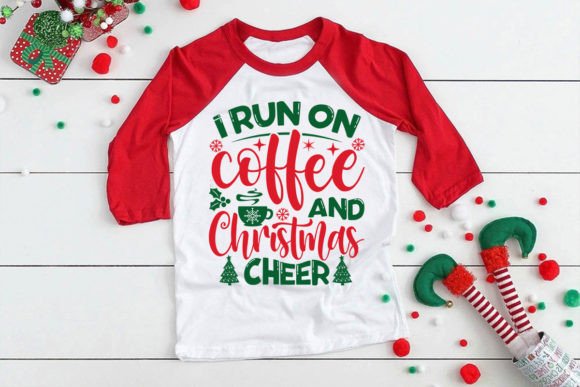
I Run on Coffee and Christmas Cheer
First Look: What This Design Communicates Before You Stitch
When I first opened I Run on Coffee and Christmas Cheer, I immediately recognized its strength as a conversation piece. The phrasing carries a playful, slightly irreverent holiday energy that feels balanced—it leans into the humor of the season without becoming overly sentimental or saccharine. For an embroidery designer or small shop owner evaluating this as a potential machine embroidery design, the first question is always whether the mood matches your customer base. In my experience, this hits a sweet spot for buyers who want holiday spirit with a wink. It suits custom apparel like sweatshirts and tees, but also transitions naturally into personalized gift items like mugs, tote bags, and kitchen towels. The design feels modern but approachable, and that matters when you are building handmade product lines for Etsy sellers or local craft fairs.
The layout is clean enough that it does not rely on excessive detail, which is a relief for anyone who has wrestled with dense stitch density in a commercial setting. It reads like a statement piece, not a background filler. That makes it versatile across crafts categories and graphics applications, but from an embroidery perspective, the real test is how well it translates to thread.
Real Case: Prepping a Custom Embroidered Tote Bag for Holiday Markets
Let me walk through a realistic scenario. I was preparing a run of tote bag designs for a December craft show, and I needed something that would appeal to shoppers looking for quick, cheerful gifts. I decided to test I Run on Coffee and Christmas Cheer on a natural canvas tote with a medium weight stabilizer. The first thing I checked was the hoop size requirement—this design fits comfortably within a standard 4x4 or 5x7 hoop, which is a practical consideration for anyone running multiple units. If you are producing small shop products in batches, you do not want a file that forces you into oversized hoops or multiple rehoopings.
The satin stitch elements in the lettering came through crisp after a test run on scrap fabric. I noticed that the fill stitch areas, particularly around the "Christmas Cheer" portion, held their shape well without puckering. For a tote bag design, that is critical because the fabric has some natural give. I also appreciated that the layout did not require frequent thread changes—three to four thread colors max, depending on your background fabric. That keeps production efficient and reduces waste, which is always top of mind for a craft business operating on tight margins.
I stitched one on a dark forest green tote and another on natural kraft-colored canvas. The contrast was strong in both cases, but I recommend testing on your actual fabric before committing to a production run. Dark backgrounds may need a white or light underlay to keep the embroidered patch-like clarity intact, especially if you are doing a standalone design without an outline.
Where This Design Excels in Real Embroidery Work
Based on my testing, I Run on Coffee and Christmas Cheer performs best on custom apparel that has some structure. Think sweatshirt embroidery, hoodies, aprons, and even baby embroidery on thicker onesies or bibs. The design's moderate stitch density means it won't overwhelm soft fabrics, but it also won't disappear on them. For applique design applications, you could easily use the lettering as a top stitch layer over a fabric background, though the file as described leans toward direct embroidery rather than applique.
I also tested it on a pillow cover made from linen-cotton blend. The result was a gift-ready piece that felt substantial without being stiff. That tells me this design would work well for holiday embroidery projects like throw pillows, tea towels, or even a simple embroidered patch that you can iron onto a gift bag. For makers who sell digital embroidery file bundles, this is the kind of design that appeals to both hobbyists and commercial embroidery clients because it reads easily and stitches reliably.
For Etsy seller shops focusing on personalized gift listings, this design offers strong keyword appeal. The phrase has a natural search-friendly quality without feeling forced. When paired with printable mockup images showing the finished embroidery on a coffee mug or sweatshirt, it becomes an easy add-to-cart product. Just be sure to check licensing before you sell finished product items—the product description mentions SVG and EPS formats for digital crafting, but machine embroidery design rights may differ. Always confirm whether your intended use falls under commercial or personal terms.
Where You Should Use This Design Carefully
No design is perfect for every surface, and I Run on Coffee and Christmas Cheer has a few limitations worth noting. First, the tiny lettering in the phrase—if you scale this down to fit a small hoop or a curved surface like a cap, the readability can suffer. I tried it on a beanie at reduced size, and the "and" portion became tight. For cap embroidery or curved surfaces, I would recommend keeping the design at a width of at least 4 inches to preserve legibility.
Second, stretch fabric like lightweight jersey or ribbed knit can cause the satin stitch to distort if you do not use a cutaway stabilizer. I advise a medium-weight tearaway for stable fabrics and a cutaway for anything with stretch. If you are stitching on dark fabric, test the thread color contrast in natural light. A dark red or green thread on black fabric may look flat in a listing photo but fine in person—or vice versa. Do not skip the test stitch.
Third, avoid using this design on products that need frequent high-heat washing or heavy abrasion without a protective layer. Kitchen towels and baby embroidery items that see repeated laundering may show wear over time if the stitch density is too dense in certain areas. A tricot backing or lightweight stabilizer left in the hoop area can help extend the life of the handmade product.
How This Design Builds Product Value and Customer Trust
From a business perspective, I Run on Coffee and Christmas Cheer helps reinforce brand consistency for shops that focus on witty, lifestyle-driven holiday items. The design has a memorable quality—customers who see it on a sweatshirt embroidery display at a market will associate that voice with your shop. That is harder to achieve with generic holiday motifs. For creative entrepreneurs building a cohesive product line, this design can anchor a series of items: mugs, totes, tees, and even design assets for digital planners.
In terms of professionalism, a cleanly stitched version of this design communicates that you understand construction. Poorly digitized lettering can ruin the perception of an entire shop. Because this file appears to originate from the SVG/printable market, I recommend confirming that the embroidery file has been properly digitized for stitch types, pull compensation, and underlay. If the file you purchased was originally created for print-cut vinyl, it may need conversion or re-digitizing for thread. Do not assume it is embroidery-ready without opening it in your software and inspecting the path.
For printable mockup creation, the clean lines of this design make it easy to photograph or render convincingly. That is a subtle advantage: when you list a handmade product online, the mockup quality influences buyer engagement significantly. A design that looks good in both thread and digital preview gives you flexibility across platforms like Etsy, Amazon Handmade, or your own site.
Practical Designer Notes Before You Commit to Production
Here is a checklist I run through with every new design, including this one:
- Test on scrap fabric first. Use the exact fabric type you plan to sell. Canvas, fleece, cotton jersey, and towel terry all behave differently.
- Check thread color contrast. Stitch a sample on light and dark backgrounds. What looks bold on screen may read muddy in thread.
- Review stitch density. If the file shows overly dense areas, reduce density in your software or choose a lighter stabilizer to avoid puckering.
- Confirm hoop size. This design fits standard hoops, but always measure the actual stitch area before loading fabric.
- Inspect small details. The "and" and the tail of "Cheer" may need slight scaling adjustments for smaller products like bibs or caps.
- Test in black and white mockups. If the design relies on color contrast for readability, ensure it also works as a single-color stitch-out for budget-conscious buyers.
- Verify licensing. The product description mentions SVG, EPS, and print cuts, but commercial embroidery use may require a separate license. When in doubt, reach out to the seller.
- Use proper stabilizer. For structured fabrics, a medium tearaway works. For stretch or thin fabrics, use cutaway. For towels, use a water-soluble topping.
These steps may seem basic, but I have seen too many small shop products fail because the maker skipped the trial run. A design like I Run on Coffee and Christmas Cheer deserves a clean execution. It has the potential to be a consistent seller across multiple seasons if you treat it with the same care you would any machine embroidery design in your library.
Final Thoughts on Adding This Design to Your Workflow
For embroidery designers, apparel decorators, and digital product sellers looking for a reliable holiday-themed addition, I Run on Coffee and Christmas Cheer offers real utility. It stitches cleanly, reads clearly, and fits a wide range of embroidery project types—from tote bag design to custom apparel and holiday embroidery gifts. Its strength lies in its directness: the phrase works as a standalone statement, which reduces the need for extra decorative elements that complicate digitizing.
I have added it to my own rotation for small batch holiday orders, particularly for Etsy seller clients who want quick turnaround items. The design does not require excessive trimming, color changes, or specialized hooping. That efficiency matters when you are producing dozens of units for a craft business or a handmade product line. If you are a creative entrepreneur evaluating whether this design fits your shop's voice and production capacity, my recommendation is to test it on your two best-selling blanks and see how your customers respond. Based on my experience, the response will be positive.
Just remember: the file format you purchase matters. Make sure you are getting an actual embroidery file and not a vinyl-ready SVG that needs conversion. If the listing is unclear, ask the seller before buying. A little due diligence upfront saves hours of frustration at the machine. With that handled, I Run on Coffee and Christmas Cheer is a design I would confidently use for commercial embroidery, personalized gift production, and holiday small shop merchandise.