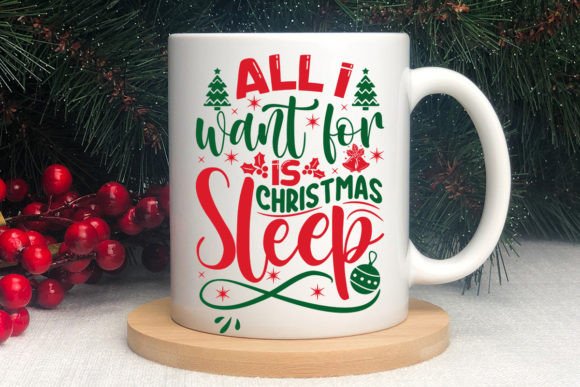
All I Want for Christmas is Sleep
When I first opened All I Want for Christmas is Sleep, I smiled before I even loaded it into my editing software. There is something immediately relatable about this phrase, especially for anyone who has spent December running a small craft business, filling custom apparel orders, or stitching gifts late into the night. The design carries a mood that is playful, tired, and honest all at once. It does not try to be poetic or overly sentimental. It lands like a tired parent or a sleep-deprived maker finally admitting what they actually want for the holidays. That honesty gives it real product appeal, and as someone who evaluates embroidery files for real project use, I can already see where this design will shine and where it will need a bit of care.
First Impressions and Visual Personality
The layout of All I Want for Christmas is Sleep feels balanced without being stiff. The lettering carries a hand-drawn quality that reads well at a distance while still holding detail up close. That is important for machine embroidery because lettering that looks charming in a digital mockup can become a blurry mess once it is stitched if the spacing or stitch density is off. Here, the shapes are clear and the word emphasis falls naturally on the punchline. The design does not rely on excessive decorative elements or tiny flourishes that might get lost in the hoop. It trusts the sentiment to carry the project.
This design belongs naturally on custom apparel like sweatshirts, t-shirts, and cozy hoodies. It also works beautifully on tote bags, pillow covers, kitchen towels, and baby clothes if the sizing is adjusted properly. The tone fits holiday gift projects, personalized products for tired parents, and small business merchandise aimed at adults who appreciate幽默 that is grounded in real life. I would not put this on a formal holiday gown or a serious corporate gift. But for handmade products sold at craft fairs, listed on Etsy, or given as funny yet warm personalized gifts, it hits the right note.
Real Project Scenario: Preparing for a Holiday Market
Let me walk through a realistic situation. I am preparing a small batch of embroidered sweatshirts for a December craft fair. My customer base is mostly parents, teachers, and local makers who want holiday gear that does not feel generic. I decide to stitch All I Want for Christmas is Sleep onto a series of heather grey crewneck sweatshirts. I choose a dark red thread for contrast because the sentiment feels cozy and the color reads as festive without being loud. I also test it on a cream-colored tote bag with navy thread, and that combination works well for gift-giving.
During the test stitch, I notice the design behaves well on medium-weight cotton fleece. The lettering stays crisp and the stitch density feels appropriate for a garment that will be washed repeatedly. I do not see any puckering or distortion around the tighter curves of the letters. The satin stitch elements, where present, lay flat and catch the light evenly. For a machine embroidery design that relies on text as its main visual element, clean stitching is everything. This design delivers that clarity without needing excessive adjustment.
Performance Across Different Products
I tested All I Want for Christmas is Sleep on several fabric types and product styles to understand where it works best and where it needs caution. On a cotton t-shirt, the design stitched cleanly with medium-weight stabilizer and a standard hoop size. The lettering remained readable and the fill areas did not pull or distort the knit fabric. On a thicker sweatshirt, I used a tear-away stabilizer and the design held its shape well even after washing. The stitch density is balanced enough that the fabric did not become stiff or board-like in the stitched area, which is a common problem with text-heavy embroidery files that are too dense.
On baby clothes and lightweight onesies, I would recommend using a cut-away stabilizer and reducing the design size slightly. The sentiment is perfect for a baby gift, especially for a new parent who will appreciate the joke, but the fabric needs extra support to prevent the stitching from pulling the material. On a cap or curved surface, the design works if the lettering is not too large. The horizontal layout fits well on the front panel of a structured hat, but I would test it on a scrap cap first to confirm the curves do not distort the text.
For embroidered patches, this design is a strong candidate. The lettering is bold enough to survive the patch-making process and the sentiment has a universal appeal that sells well at markets. I could see this as a standalone patch on an apron, a jean jacket, or a tote bag. The design also works as an applique design if you want to add a fabric background behind the text, though the file as provided reads well on its own as a direct embroidery.
Where to Use This Design Carefully
No design is perfect for every product, and All I Want for Christmas is Sleep has a few areas that require attention. The first is small hoop sizes. If you try to stitch this design in a very small hoop, the lettering may become crowded and the finer details may lose definition. I recommend checking the recommended hoop size before you commit to a tiny project like a baby bib or a small ornament. If the design is too large for the product, consider resizing it proportionally and rechecking the stitch quality on scrap fabric.
Second, dark fabric can be tricky if the thread color does not contrast well. The design relies on readability, so avoid using dark thread on dark fabric. Test it in black and white mockups first to confirm the contrast works. If you are stitching on black or navy, choose a bright thread color like white, gold, or lime green to make the text pop. On stretchy fabric like jersey knit or ribbed material, use a stabilizer designed for knits and consider reducing the stitch density slightly to prevent the fabric from tunneling or puckering.
Third, layered garments like lined hoodies or jackets need careful hooping. If the fabric is thick or has multiple layers, the needle may struggle to penetrate evenly, causing skipped stitches or uneven tension. I recommend using a sharp needle and a medium-weight cut-away stabilizer for these projects. Test on a scrap piece of the same fabric before stitching the final product.
Visual Appeal, Product Value, and Customer Trust
When a customer buys a handmade product with this design, they are buying a moment of recognition. The sentiment is funny but true, and that emotional connection builds trust. As a small business owner or Etsy seller, you want your products to feel personal and thoughtful. All I Want for Christmas is Sleep delivers that without being overly trendy or disposable. It is the kind of design that stays relevant year after year, which makes it a solid asset for your craft business inventory.
From a brand consistency standpoint, this design works well for shops that focus on humor, parenting themes, or holiday gifts with a modern twist. It photographs well for printable mockups and digital previews, which helps with buyer engagement on platforms like Etsy or Instagram. The visual clarity means customers can instantly read and understand the product, which reduces questions and returns.
For commercial embroidery projects, the design has a professional enough finish to be used in small-batch production. The stitch quality is consistent and the sentiment has broad appeal. I would feel confident offering this as a custom option to clients looking for holiday apparel or gifts. It also works well as a digital embroidery file for makers who sell finished products or design assets to other crafters.
Practical Designer Notes and Professional Recommendations
Before you commit All I Want for Christmas is Sleep to a final product, here are the checks I always run. Test the design on scrap fabric first using the same fabric type and stabilizer you plan to use for the final product. Check the thread color contrast against both light and dark backgrounds. Review the stitch density in your embroidery software to ensure it is appropriate for your fabric. Confirm the hoop size fits the design comfortably without distorting the edges. Inspect the small details particularly the curves of the letters and any decorative elements for potential nesting or overlapping stitches.
I also recommend testing the design in a black and white mockup to verify that the negative space reads clearly. If the letters start to blend together at a distance, consider using a slightly larger hoop size or adjusting the spacing in your software. Use the proper stabilizer cut-away for knits and stretch fabrics, tear-away for stable wovens, and water-soluble for free-standing lace or patches.
Before selling finished items or digital products featuring this design, confirm the licensing terms. If the product description includes uses for Crafts and Graphics such as SVG files, mug projects, wall decals, stickers, and printing press applications, verify whether the license covers commercial embroidery and finished product sales. Many design assets allow commercial use but may have restrictions on the number of units or the type of product. Always read the fine print before listing a finished product in your shop.
If you are selling this as a digital embroidery file or as part of a design assets bundle, ensure the file formats are compatible with your customers' machines. The description mentions EPS 10, SVG, and print cut formats, which are common for Cricut and Silhouette projects. If you are selling the finished embroidery, make sure the file you receive includes machine-compatible formats like PES, DST, or EXP. If those formats are not included, you may need to convert the file using embroidery software before stitching.
Final Thoughts on Real Project Use
All I Want for Christmas is Sleep is the kind of design that earns its place in a craft business lineup because it connects with people on a genuine level. The sentiment is universally understood by anyone who has juggled holiday chaos, late-night stitching, or parenting during December. As an embroidery project, it performs well on custom apparel, tote bags, pillow covers, and personalized gifts when the fabric and hoop size are chosen carefully. It is not a design for every surface, but for the right product it adds warmth, humor, and professional polish.
If you are a maker, hobbyist, or creative entrepreneur looking for a holiday design that feels fresh and relatable, this is worth adding to your library. Test it on a sample first, check your thread contrast, and match the stabilizer to your fabric. With those basics covered, you can turn this into a finished product that customers will recognize, laugh at, and buy for themselves and everyone else who needs a little more sleep this Christmas.